Geospatial Science for Environmental and Infrastructure Decision-Making
Spatial modelling, constraint mapping, and geospatial platforms supporting environmental planning, infrastructure development, and conservation.
Independent geospatial consulting supporting environmental planning,
infrastructure development, and conservation.
BioGeo develops geospatial models and digital platforms that integrate environmental, engineering, and spatial data to support suitability analysis, infrastructure planning, constraint mapping, and complex spatial decision-making.
Led by Dr Andrew Mackey, a geospatial scientist specialising in ecological modelling, spatial decision support, and remote sensing.
Services
Geospatial Platforms and Decision-Support Applications
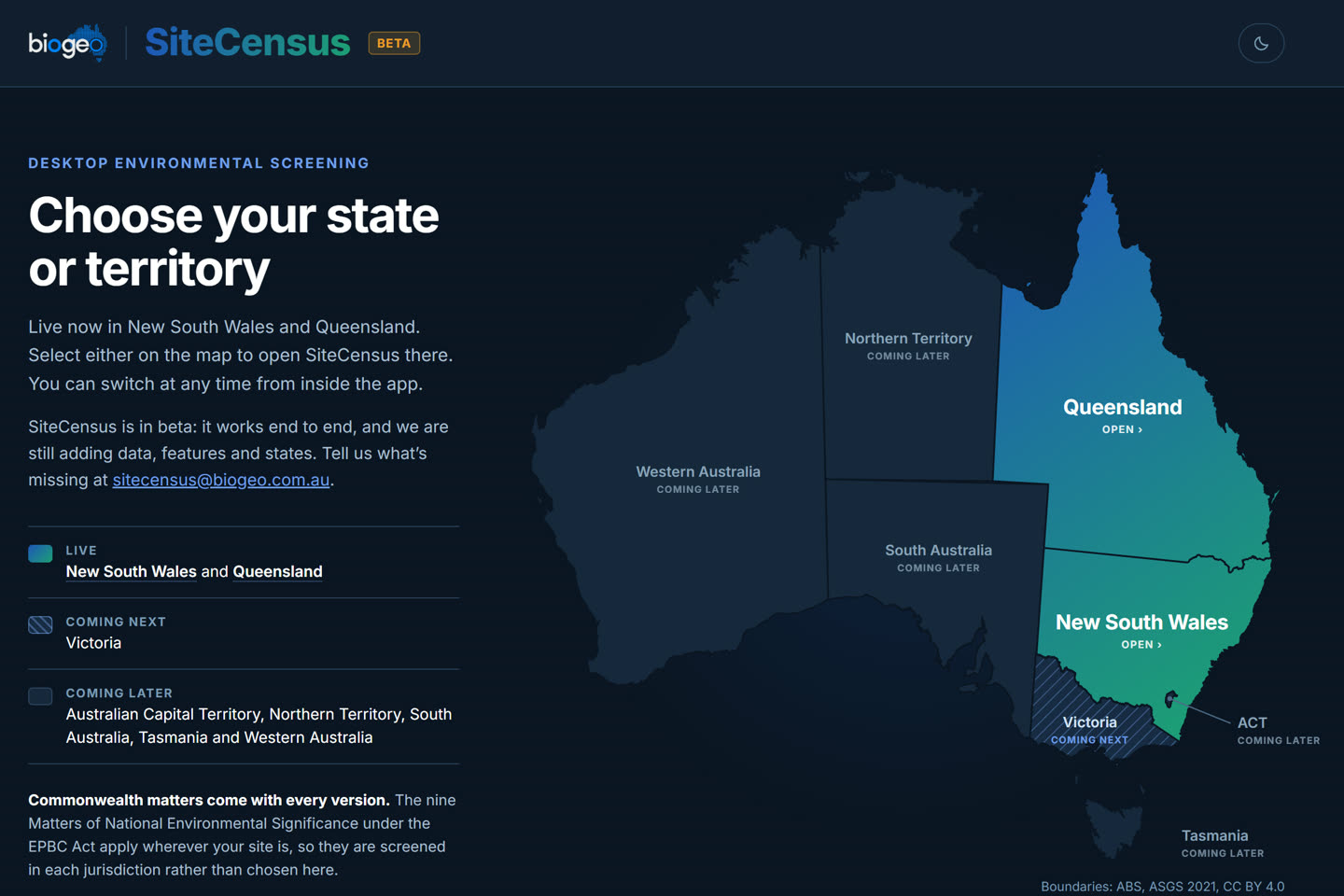
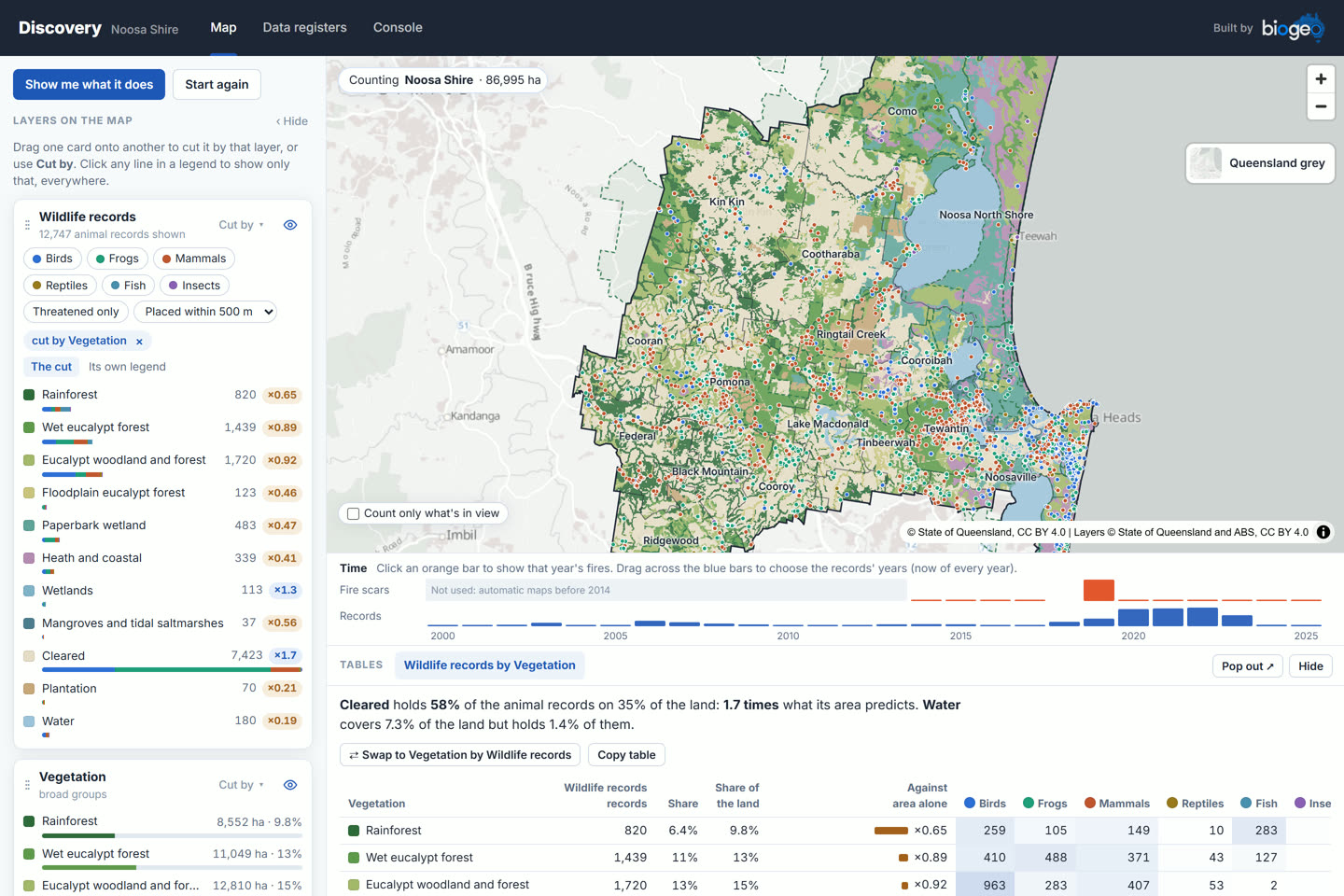
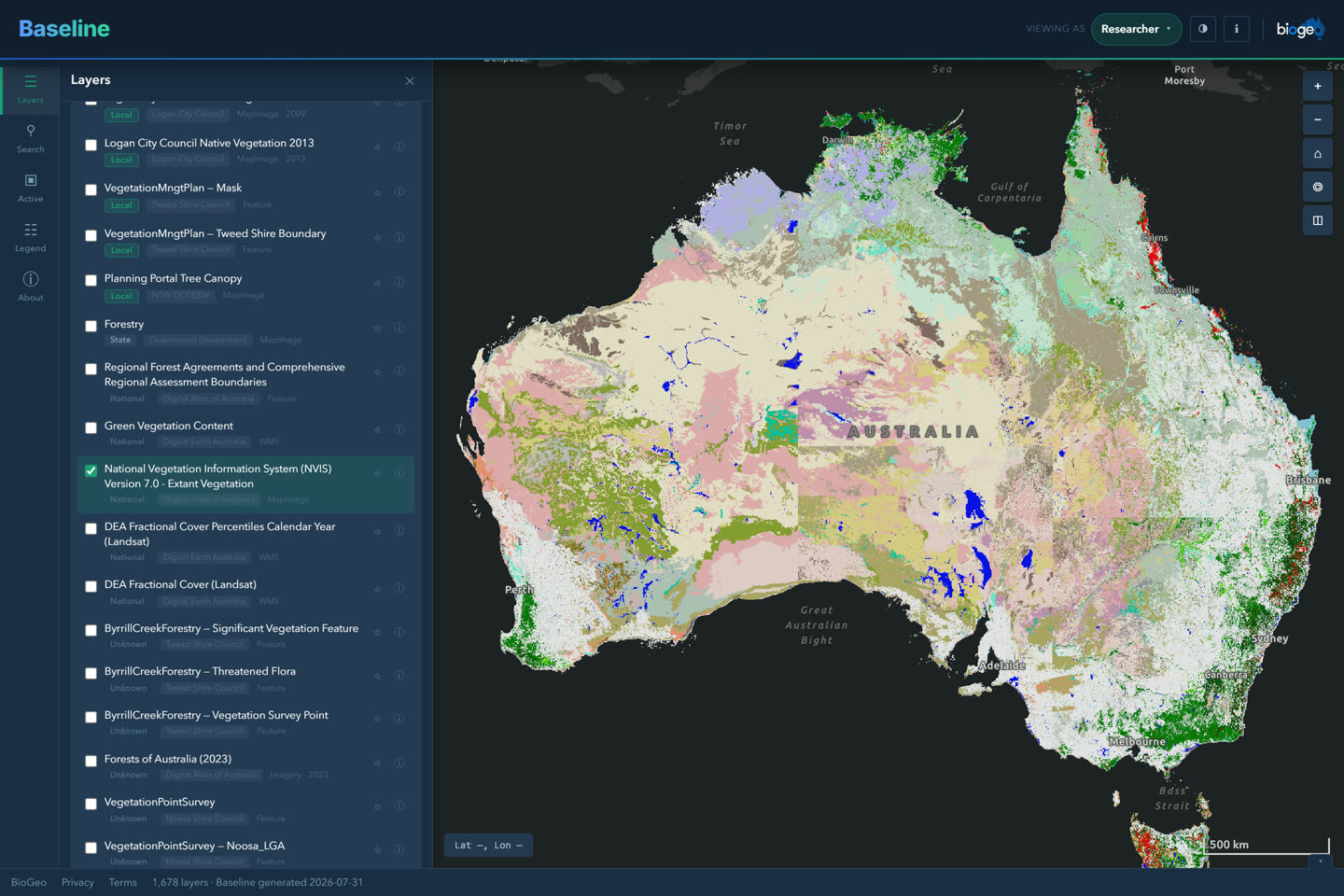
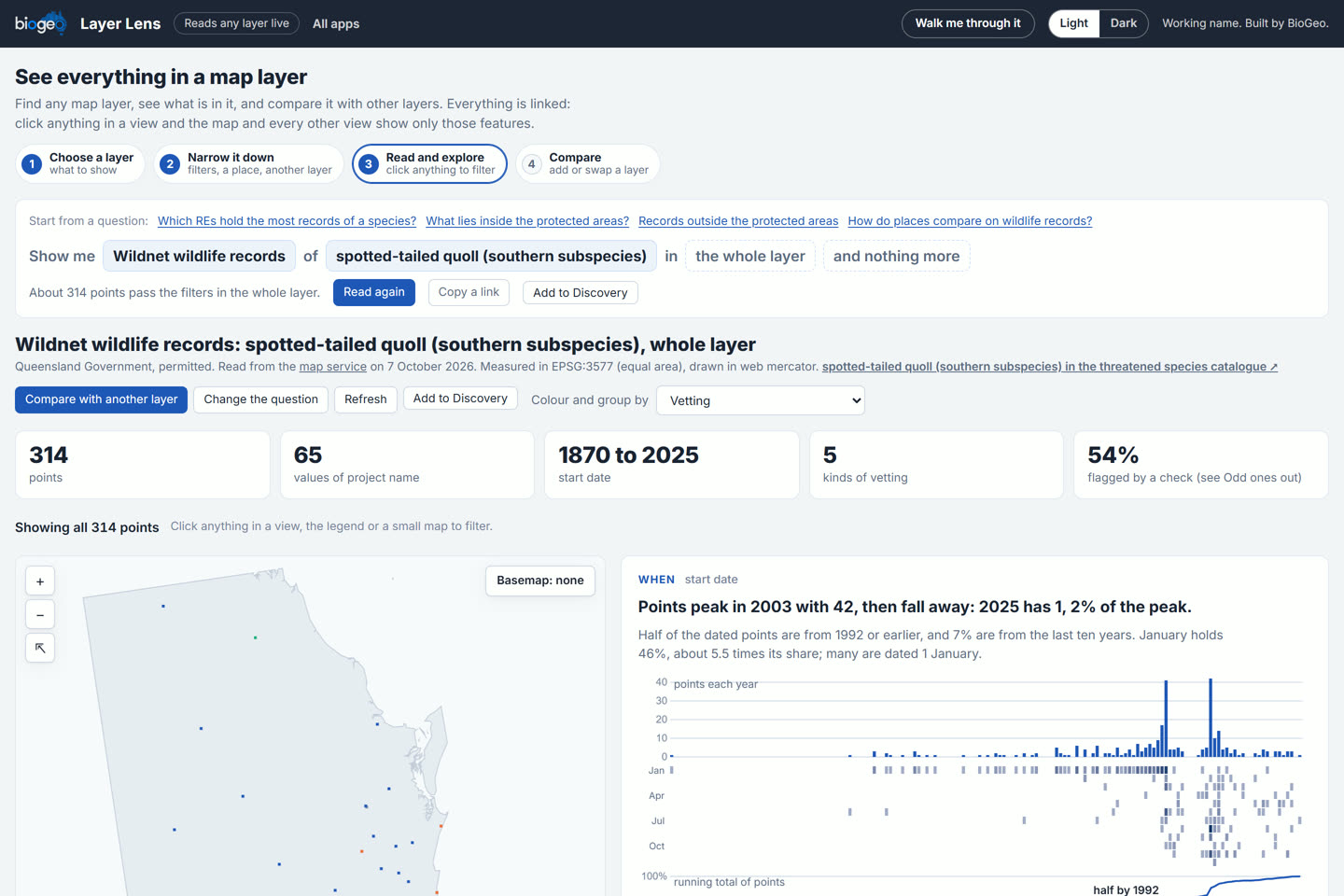
Biogeo develops tailored geospatial platforms that integrate spatial analysis, environmental datasets, and analytical outputs into interactive decision-support environments.
These platforms allow users to visualise spatial information, explore analytical results, and monitor projects through web-based mapping tools and dashboards.
Typical outputs
interactive web mapping platforms
spatial dashboards and reporting tools
integrated environmental data portals
spatial decision-support interfaces
project monitoring dashboards
scenario visualisation tools
Application opportunities
planning and development assessment portals
environmental monitoring platforms
infrastructure planning dashboards
conservation data portals
research and data sharing platforms
Corridor Connectivity and Network Modelling
Biogeo develops spatial connectivity models to identify efficient pathways for ecological movement, infrastructure corridors, and transport networks.
Using least-cost path, cost-distance, and network modelling approaches, these analyses support route selection and connectivity planning.
Typical outputs
resistance surfaces
least-cost pathways
corridor probability maps
connectivity networks
route suitability models
corridor prioritisation layers
Application opportunities
infrastructure route planning tools
wildlife corridor planning platforms
transport corridor analysis dashboards
connectivity planning applications
infrastructure scenario exploration tools
Suitability Modelling and Multi-Criteria Decision Analysis
Biogeo develops spatial suitability models that integrate environmental, physical, planning, and operational constraints within transparent weighted frameworks.
These models support strategic planning, site selection, and environmental assessment by identifying locations that best satisfy defined criteria.
Typical outputs
suitability surfaces and scoring models
weighted spatial decision models
constraint and opportunity layers
development suitability maps
spatial ranking of candidate sites
spatial decision-support layers
Application opportunities
site selection applications
infrastructure planning tools
conservation prioritisation platforms
development feasibility tools
spatial scenario exploration interfaces
Remote Sensing and Multi-Spectral Terrain Analysis
Biogeo analyses satellite imagery, LiDAR datasets, and elevation models to quantify landscape structure, vegetation condition, and environmental change.
These analyses provide objective spatial metrics for monitoring, environmental assessment, and landscape characterisation.
Typical outputs
vegetation height models
canopy cover metrics
terrain roughness and slope layers
erosion indicators
landform stability metrics
landscape condition indicators
Application opportunities
environmental monitoring platforms
rehabilitation monitoring dashboards
landscape change detection tools
vegetation condition mapping systems
remote sensing analytics portals
Infrastructure Constraints and Opportunity Analysis
Biogeo integrates environmental, planning, engineering, and land-use datasets to identify constraints and opportunities across large planning areas.
These analyses support early-stage planning by clearly identifying areas where development is feasible, constrained, or unsuitable.
Typical outputs
development constraint maps
opportunity surfaces
composite constraint indices
spatial planning overlays
corridor feasibility surfaces
infrastructure planning layers
Application opportunities
infrastructure planning dashboards
strategic land-use planning tools
corridor planning platforms
development feasibility portals
regional planning decision-support systems
Ecological Modelling and Habitat Suitability Analysis
Biogeo applies ecological modelling techniques to analyse species distributions, habitat suitability, and landscape connectivity.
These models integrate environmental variables, terrain characteristics, vegetation structure, and climatic data to support conservation planning and environmental assessment.
Typical outputs
habitat suitability models
species distribution maps
landscape connectivity surfaces
biodiversity prioritisation layers
ecological risk assessments
conservation planning datasets
Application opportunities
conservation planning platforms
biodiversity monitoring portals
ecological decision-support systems
habitat restoration planning tools
environmental research dashboards
Supporting Wildlife and Habitat Conservation
BioGeo works with clients, universities, conservation organisations, and research groups to apply geospatial science and spatial analysis to wildlife conservation challenges. Through analytical modelling, environmental data integration, and decision-support tools, these collaborations support practical conservation outcomes and the protection of native biodiversity.
Biogeo contributes both funding and professional time to conservation initiatives, supporting projects that protect and restore native ecosystems.
Supporting wildlife conservation initiatives across Queensland, Australia, and the world.
Biogeo operates as a profit-for-purpose business.
$5 from every billable hour supports wildlife conservation projects, alongside volunteer time and pro bono geospatial analysis supporting conservation and ecological research.
Interested in discussing a project or collaboration?
Send a message and Biogeo will respond as soon as possible.